| ||||

Thursday October 22nd Meeting #750
Open If you would like to speak, or simply would like more information about the
College of Complexes, contact the Program Coordinators Tom Berry tomberry1@att.net
214-738-3386 ell): John Beesley johnb001@airmail.net 972-931-7770 (home).
75th Anniversary 1951 - 2026
Chicago Campus
Every Other Saturday 5 PM CT Meeting #3,862
Alternate programs on Zoom from the Chicago Campus at 5:00 PM CT
Zoom link https://us02web.zoom.us/j/81216467150
To speak contact Program Coordinator Charles Paidock at (312) 714-7790 or cpaidock@hotmail.com
| ||||
| ||||

Every Thursday 6:00 PM
Sustaining the Academic Tradition of "One Fool at a Time"
Dallas Campus
Solicitation for Speakers
The Next Open Date is
October 22nd
or any subsequent Thursday in the coming year

To Disquiet the Minds of the People
The College of Complexes in Chicago, IL,
biweekly on Saturday at 5:00 PM on Zoom

Occupy Your Mind
Established Feb. 28, 2009
Weekly Free Speech Forum
College of Complexes
The Playground for People Who Think
| ||||
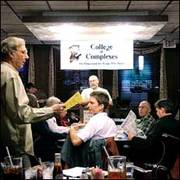
1. Presentation by Guest Speaker
2. Questions and Answers
3. Remarks and Rebuttals
(5 minutes each / infamous)
Format:
| ||||
All meeting are open to the public.
The college maintains no membership, and is operated on a volunteer basis.
If you would like to speak, or simply would like more information about the College of Complexes, contact the Program Coordinators
Tom Berry tomberry1@att.net (214) 738-3386 (cell)
John Beesley johnb001@airmail.net 972-931-7770 (cell)

| ||||



| ||||

Watch Videos of Previous Presentations



No Meetings in Restaurant Until Further Notice

Statement on Free Speech
Our constitution and laws encourage the freest possible exchange of opinions, ideas, and information. In part, that recognizes our worth and dignity as human beings. To forbid us to speak our minds demeans us and makes us more like slaves or robots than citizens of a free country. But as important as freedom of expression is for us as individuals, it is perhaps more important to society at large.
| ||||
| ||||
Zoom Meetings Only
To Join Zoom Meeting
Meeting ID: 871 0957 8816
Password: 127361
346 248 7799 US (Houston)
1 312 626 6799 US (Chicago)



Thursday October 15th Meeting #749
Are Witches Real in 2026?
Dr. Daniel Herlihy. A Catholic Physician, trained to evaluate claims of demonic influence. will discuss the history, psychology, religion, and culture of modern witchcraft. He asks: “When you hear the word “witch”, what comes to mind? “Wicked witch, spellcaster, healer, or modern spiritual practitioner?” Daniel argues that we need to understand how the concept of witches developed historically, how to distinguish myth from reality, how to examine modern witchcraft movements, and how to evaluate claims of supernatural powers critically. He concludes on whether witches still exist in todays’ society.
Thursday October 8th No Meeting